



Blog
Korrodin Screw Icon: Steel and Stainless Steel – Understanding the Difference
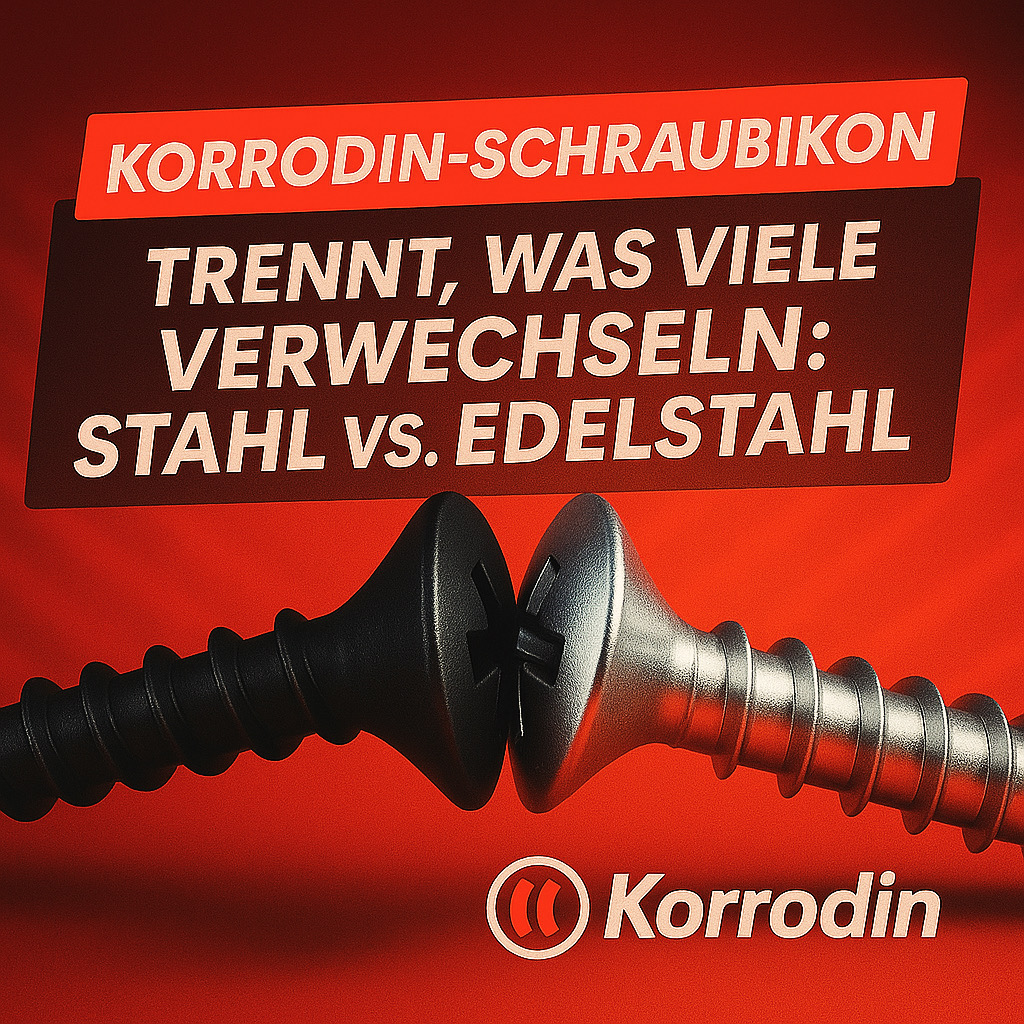
The terms steel and stainless steel are often used interchangeably in everyday language, but they describe different groups of materials. As a general rule, stainless steel is a special type of steel. This means that all stainless steel is steel, but not all steel meets the criteria for stainless steel.
The Basics of Steel
Steel consists of iron and carbon, with a carbon content of less than approximately 2%. By adding alloying elements such as chromium, nickel, or manganese, manufacturers can significantly influence the steel’s mechanical properties and corrosion resistance. Depending on the composition, different types of steel are produced for a wide range of applications.
What Characterizes Stainless Steel?
Unlike conventional steel, stainless steel is generally characterized by a high degree of purity. In particular, the levels of impurities such as sulfur and phosphorus are strictly limited by applicable standards, which has a positive effect on toughness, machinability, and corrosion behavior. Many stainless steels also contain at least 10.5% chromium, which forms a protective passive layer on the surface. This alloying element is what gives certain types of stainless steel their corrosion resistance.
Applications and Classification
Steel is primarily used where high strength and cost-effectiveness are the main priorities. Stainless steel is preferred in areas where corrosion protection, hygiene, or a high-quality appearance are essential, such as food processing, plant engineering, and architecture.
Conclusion
Steel is a versatile, general-purpose material, while stainless steel is a more highly engineered variant for more demanding applications. Clearly distinguishing between the two helps ensure that the right material is selected for each application.