



Blog
Hydrogen Embrittlement – An Often-Overlooked Risk in Fasteners
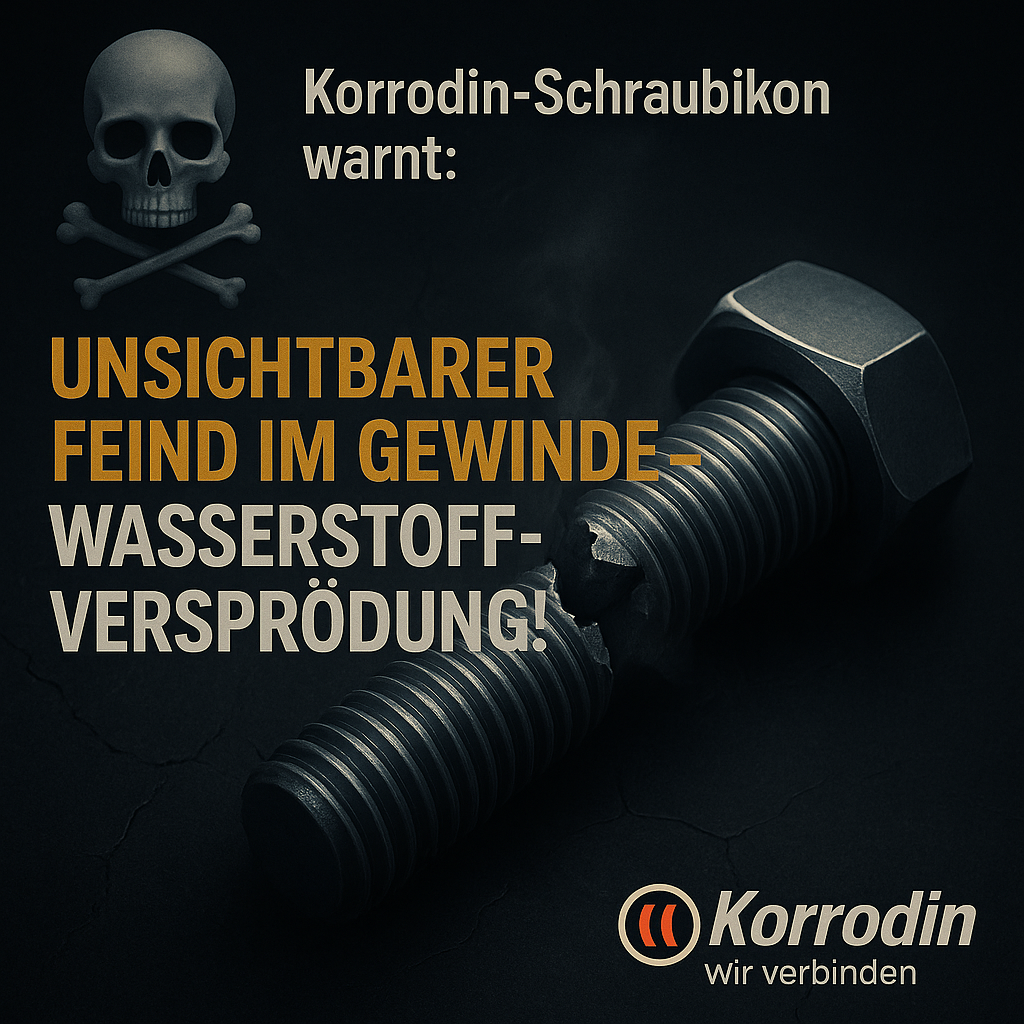
In the world of fasteners, there is a phenomenon that can go unnoticed for a long time but have serious consequences: hydrogen embrittlement. While it cannot be detected with the naked eye, its effects can appear suddenly and without warning, causing component failure.
What Is Hydrogen Embrittlement?
During certain manufacturing and surface treatment processes (such as electroplating, pickling, and cleaning), atomic hydrogen can penetrate the steel. It accumulates at dislocations, grain boundaries, and other lattice defects in the material.
The result: The material loses toughness and ductility. This can lead to brittle, often delayed fractures, even in components that initially appear to be unaffected.
Particularly at Risk:
-High-strength fasteners (property class 10.9 and higher)
-Fine-threaded fasteners
-Components subjected to sustained or cyclic tensile loads
Risk Mitigation Measures
To reduce the risk of hydrogen embrittlement, targeted preventive measures are essential:
-Perform hydrogen embrittlement relief heat treatment after electroplating processes (typically at approximately 200°C for several hours, depending on the material and component geometry)
-Use low-hydrogen or hydrogen-free manufacturing processes
-Handle acids and cleaning agents carefully, and ensure that the parameters for coating and pretreatment processes are correctly set
Careful process selection and consistent quality assurance are essential for ensuring the long-term safety and reliability of highly stressed bolted joints.